Provenance
- Question
- Who made the record, when and about which practice?
- What to record
- Note the source, context and version.
 International Institute of
Living culture,
place and community.
Practice notebooks · Totonacapan Institute
The programme begins with a practical question: what needs to remain so that another person can learn and exercise knowledge with judgement? The working texts connect a participatory inventory, communities of practice, human learning and the evaluation of artificial intelligence tools. The proposed sequence starts with knowledge holders’ priorities.
Tegrity.AI connects the programme with research on documentary integrity, ambiguity and AI system evaluation. The work seeks to distinguish poorly defined responsibilities, contradictory versions and legitimate variants. This distinction makes it possible to formulate clearer experiments and recognise the limits of what an archive can teach.
This sequence describes a research design in preparation. Its hypotheses require fieldwork, agreements and validation; findings will be published as such when supporting evidence is available.
Three questions help establish where a description comes from and what still needs to be examined.
Documentation is valuable when it helps people understand a practice and supports those who sustain it.
The Institute connects documentary research, territorial memory and knowledge transmission. It relates sources to people, processes and the conditions that enable knowledge to continue.
A photograph can show an object; a record identifies its provenance; testimony explains a use; observing a practice helps make sense of decisions and difficulties. These records complement one another without becoming interchangeable.
Define purpose, participants, permissions and access.
Preserve sources, context, dates and attribution.
Distinguish documents, memory and interpretation.
Share a useful description with those involved.
An initiative in preparation: categories, transmission, risks and needs, with separate consent choices.
ExploreAI & Ancestral Wisdom. A conceptual line on documentation and technology: provenance, human review and respect for knowledge.
ExploreA documentary case for studying jewellery, watchmaking and master–apprentice learning.
ExploreThis line revisits how people learn and develop capabilities in changing contexts. Within culture, it explores the relationship between experience, understanding and practice: learning to do, explaining decisions and preparing others to continue. This website does not announce open courses, qualifications or certifications.
Participation, recording, publication and reuse are separate decisions. Documentation does not turn restricted knowledge into freely usable material. Each project must define access, publication and how contributions will be recognised.
Proposals may concern archives, craft history, transmission, material culture or responsible documentation. A useful starting point is a specific question, the sources needed and an outcome that benefits participants.
Propose a research project →The trajectory, learning architecture and exchanges with Rose Luckin, Europeana, IGF and African networks.
Read the complete page →An archival record, a botanical plate and an activity report invite different questions. Each route leads to the source and its context.
01 · Archive
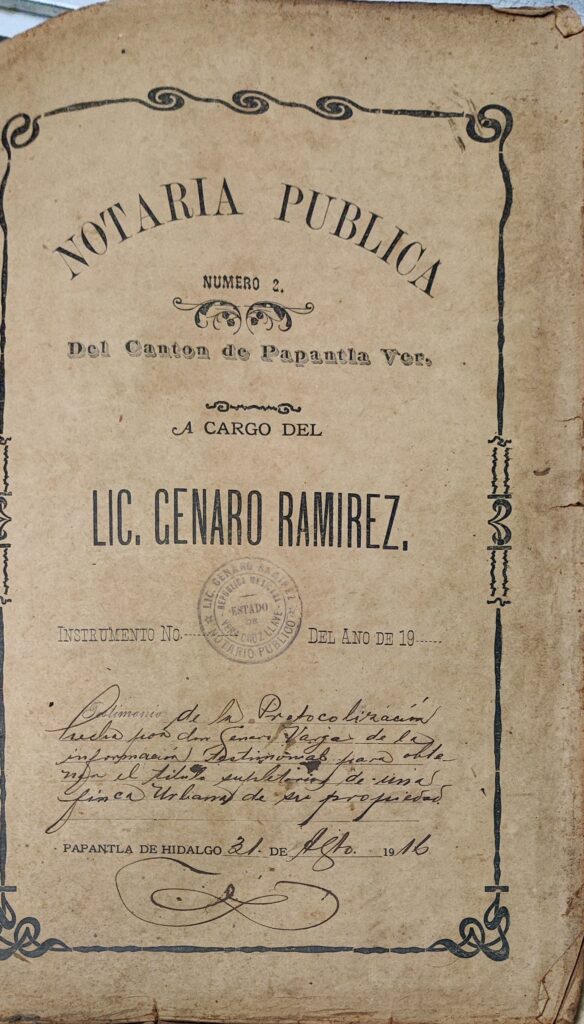
The cover and folio offer clues to the record’s identity: the date, the notary’s office and the names recorded.
02 · Natural history
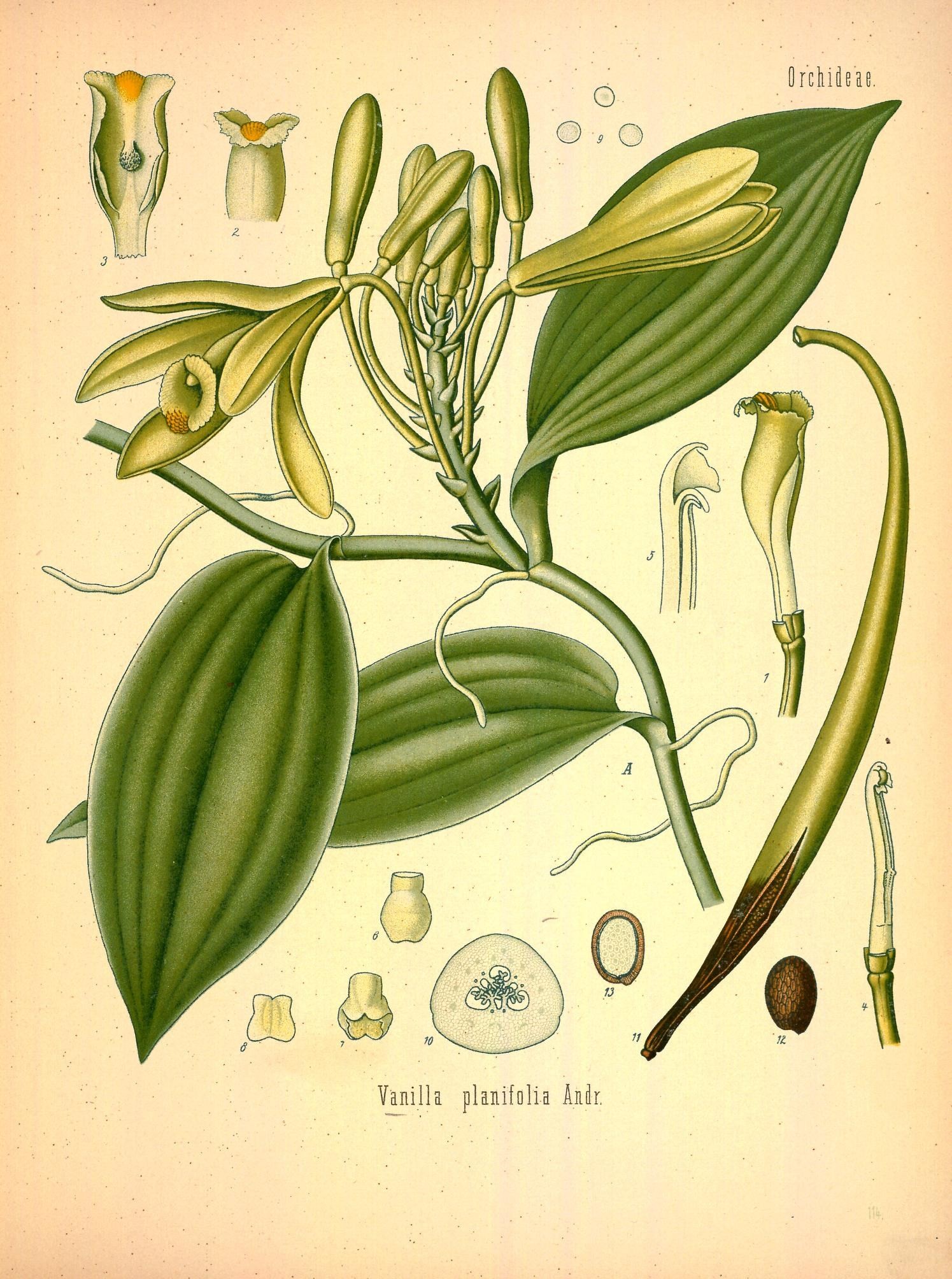
The botanical plate shows which details are enlarged to describe the plant, flower and fruit.
03 · Institutional activity
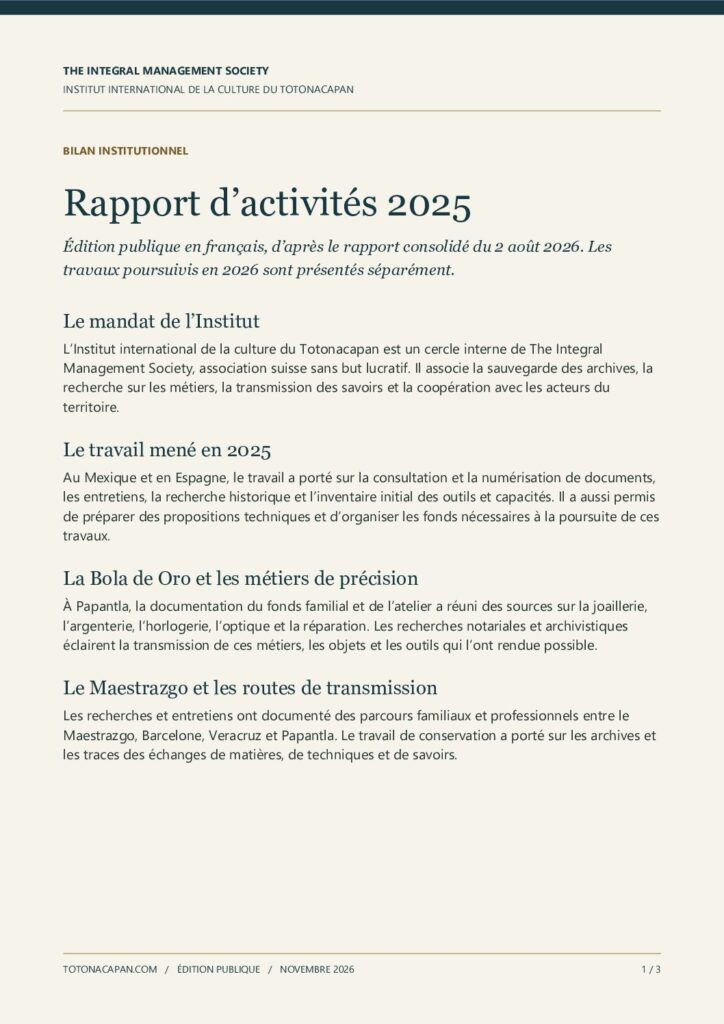
The guide brings together the Charta, the public report and the activity presentations.
Perspective Beyond / An entrance to the thought Atlas
Research & Transmission
The Atlas connects pages, ideas, experiences and sources. This map starts from the current reading and opens a path through its conceptual neighbours.
Select an idea to read what it contributes and how it connects. Lines also connect the readings with each other.
Copy the entry and give it to your assistant. Ask for an explanation, a comparison or an application to your own question.